Overgrown Pastures Cut and Cleaned in One Visit
Brush Hog Services in Green Ridge for Missouri pastures, roadsides, and rural lots with seasonal overgrowth that needs mowing and debris removal
Wet Missouri springs produce waist-high growth across pastures and roadside margins that standard mowing equipment cannot process, and cutting alone leaves windrows of matted vegetation that smother grass and create fire hazards if not removed. Thacker Skid-Steer Service handles brush hog mowing and debris cleanup in a single mobilization, so you do not coordinate separate contractors for cutting and clearing. Toby runs the brush hog to cut overgrown vegetation, then uses skid-steer equipment to pile or spread the cut material depending on whether you plan to burn, compost, or let it decompose in place across your Pettis County acreage.
Brush hog work addresses tall grass, weeds, and light woody growth that has overgrown pastures, lot margins, or roadside easements where maintaining visibility and access matters for farm operations or property compliance. The rotary cutting deck processes voluminous vegetation faster than finish mowers and handles stem thickness that would damage lighter equipment, which matters on rural Missouri ground where growth is rarely uniform or well-maintained.
Request a free estimate to determine how much acreage needs mowing and what debris handling makes sense for your land.
Why Combined Mowing and Cleanup Works Better
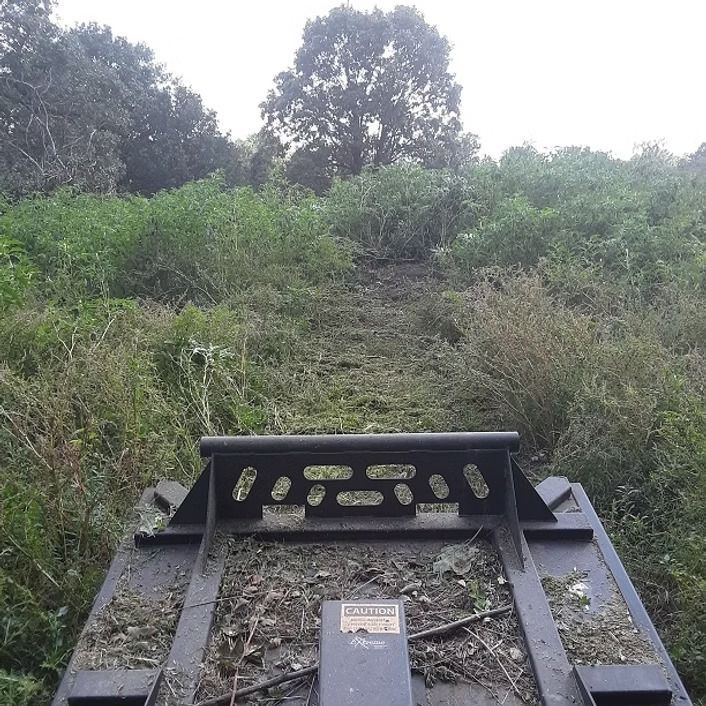
Brush hog cutting drops heavy windrows of vegetation that dry into dense mats if left in place, and those mats block sunlight from underlying grass, create uneven ground for livestock, and become difficult to process once fully dried and compacted. Combining mowing with immediate skid steer cleanup means the cut material is moved or spread while still manageable, and you avoid the secondary problem of dealing with matted vegetation weeks after the initial mowing is finished. Toby handles both operations during the same visit, so equipment mobilization costs and scheduling complexity are minimized.
After mowing and cleanup are complete, you will see pastures cut to manageable height, debris piled for burning or spread thin for decomposition, and ground that livestock can access safely without navigating overgrown vegetation or tripping hazards. Roadside margins regain visibility for equipment access and traffic safety, and lot borders that were visually overgrown return to maintained appearance. Properties that were difficult to use or non-compliant with county vegetation ordinances become functional and maintainable again without requiring separate follow-up visits.
Seasonal brush hogging is a recurring need on Missouri farm ground—spring growth after wet weather and late summer regrowth both require mowing to keep pastures usable and compliant. Toby provides honest assessment of what your land needs during the estimate so you understand whether one pass will suffice or whether follow-up mowing makes sense depending on your grazing schedule and growth patterns.
What Property Owners Usually Ask
Farmers and rural landowners want to know what vegetation brush hog equipment can handle, how debris will be managed, and what the land will look like after mowing is complete.
What types of vegetation can a brush hog cut?
Brush hog mowers handle tall grass, weeds, brambles, hedge, thorny locust, and light woody growth up to approximately two inches in stem diameter, but they are not designed for mature brush or established trees, which require clearing equipment instead, and Toby assesses your vegetation type during the site visit to confirm what can be mowed effectively.
How do you handle the cut vegetation after mowing?
Cut material is piled for controlled burning, spread thin across the mowed area to decompose naturally, or staged for later removal depending on your preferences and whether burning restrictions or debris volume make one approach more practical than another, and those options are discussed before work begins.
How short does brush hog mowing cut the vegetation?
Brush hog cutting typically leaves vegetation at four to six inches depending on ground conditions and equipment setup, which is shorter than overgrown pasture but not as clean as finish mowing, and the goal is volume reduction and regrowth control rather than manicured appearance.
Can you mow around obstacles like fence posts and equipment?
Brush hog mowing works around fixed obstacles by cutting as close as clearance allows, but some hand trimming or follow-up work may be needed in tight corners or directly against posts and structures where the mower deck cannot reach safely without risk of equipment damage.
How often should pastures be mowed to stay manageable in Green Ridge?
Most Missouri pastures benefit from mowing once or twice per growing season depending on rainfall and grazing pressure, with late spring and mid-summer being common timing, though properties with low stocking rates or high growth may require more frequent mowing to prevent woody species from establishing.
Thacker Skid-Steer Service has provided brush hog and cleanup services on West-Central Missouri rural land for eight to ten years, and Toby visits every property before starting to confirm what mowing will accomplish and how debris will be handled. Call or leave a message to arrange a free local estimate for your mowing and cleanup needs.