
Solid Ground That Holds Through Mud Season
Dirt and Gravel Work in Green Ridge for rural driveways, farm lanes, and site pads that won't wash out every spring
Heavy clay soils across Pettis County turn every unprepared driveway and farm lane into a mud pit once spring rains hit. Thacker Skid-Steer Service grades, preps, and places gravel for rural driveways, farm access lanes, building pads, and lot prep across Green Ridge and surrounding West-Central Missouri. Proper base work stops the ruts and washouts that show up every year when drainage isn't addressed before gravel goes down, and the skid steer reaches tight spots where larger grading equipment can't maneuver without tearing up more ground than it fixes.
The work involves stripping unstable topsoil, establishing grade for water runoff, compacting the base layer, and placing gravel to create a stable surface that drains instead of holding water. Pettis County clay doesn't drain on its own—without proper slope and base prep, gravel sinks into mud and creates a worse problem than you started with. Skid steer grading establishes the crown and slope needed to shed water off the surface before gravel placement locks in the grade.
Schedule a free estimate to identify drainage flow, grade requirements, and gravel depth before any dirt moves.
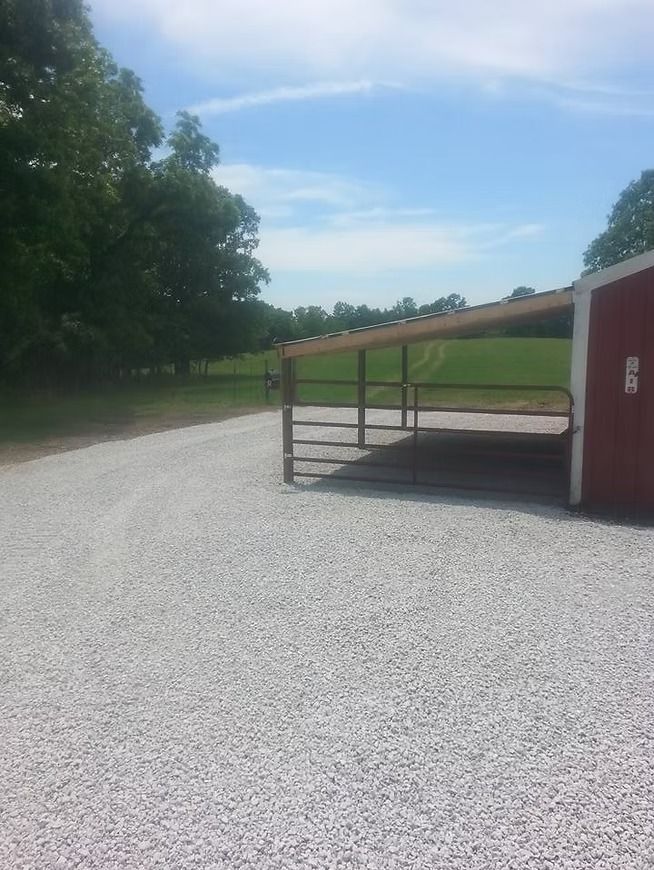
Why Base Prep Matters Before Gravel Placement
Base preparation removes the soft, organic topsoil layer and establishes a compacted subgrade that won't shift or settle under load. Grading creates the crown or slope that directs water off the driveway or lane surface instead of pooling in low spots that freeze, thaw, and create ruts. The skid steer compacts the base in lifts, ensuring each layer is stable before the next goes down, and gravel placement follows the finished grade to lock in drainage.
Once the work is complete, you drive on a surface that stays firm through wet weather instead of turning into a rutted mess every time it rains. Water sheds to the edges instead of pooling in the center, and the gravel layer holds its position instead of sinking into soft clay or washing out during heavy runoff. Building pads for pole barns, sheds, or tiny homes sit level and drain properly, so structures don't settle unevenly or collect water around the foundation perimeter.
The site visit happens before any equipment shows up because Toby tells you up front what the job requires, what gravel depth makes sense for your use, and what drainage corrections need to happen before gravel goes down. You know the cost and scope before work starts, and there's no guessing about what's included or what gets billed extra.
Answers to Frequent Service Questions
Rural landowners across West-Central Missouri ask similar questions about dirt and gravel work before committing to site prep or driveway improvements.
How deep does gravel need to be for a rural driveway that handles truck traffic?
Depth depends on soil conditions and traffic load, but proper base prep and compaction matter more than just dumping extra gravel on soft ground that hasn't been graded or drained.
What happens if gravel gets placed without grading the base first?
The gravel sinks into soft clay, creates ruts where water pools, and washes out during the first heavy rain because there's no stable base or drainage slope to hold it in place.
Can skid steer grading work in areas where larger equipment can't reach?
The biggest Takeuchi skid steer maneuvers into tight access lanes, around buildings, and along narrow farm paths where full-size graders or dozers would tear up more ground than they improve.
When is the best time to schedule dirt and gravel work in Pettis County?
Late summer and early fall offer the driest ground conditions for base prep and compaction, though work can happen year-round as long as the ground isn't frozen or saturated beyond workable limits.
Does the work include drainage corrections for standing water or washout areas?
Site prep identifies where water flows and grades the surface to direct runoff away from the driveway or pad, preventing the pooling and erosion that cause premature failure in rural driveways.
Thacker Skid-Steer Service has handled rural dirt and gravel work across West-Central Missouri for 10+ years, and every job starts with a free local estimate that walks the site and outlines exactly what's included. Toby always goes to look at the project first, and he'll get back to you the same day to schedule the site visit or answer questions about base prep and gravel requirements.